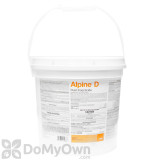
Alpine D Dust Insecticide - 3 lb. - Questions & Answers

Displaying 1 to 7 (of 7 questions)
Sort:
  • Asked by Shannon
    11/21/2010
    Q
    My upstairs neighbor has bed bugs. What can I do to prevent them?
    A
    Bedbugs can be a tough pest to prevent. Namely because these little insects are notorious hitch hikers, and you could completely seal all possible ways for the bedbug to come from the infested neighbor and still bring some home on your belongings from the movies, the mall or your place of employment. Having said that, you should still do all that you can to prevent having bedbugs come over from the neighbor. You should use caulk to seal any cracks or crevice around the baseboards, window frames, door frames, and around places where vents, cables, pipes or wires come through the wall. You can apply a dust such as Alpine dust into wall voids, electrical outlets, and switch plates. This will help kill any bedbugs that make their way through the walls. We also recommend thoroughly inspecting your mattress and headboards and bed frame frequently for any signs of bedbugs.
    Was this answer helpful to you?   Yes No
    11 of 15 people found this answer helpful.
  • Asked by Renee
    07/30/2010
    Q
    How do I apply Alpine Dust?
    A
    You will use a hand duster to apply the dust. For general pest control of Cockroaches, Ants, Crickets, Silverfish, Firebrats: Apply thoroughly to all areas where pests crawl and hide, especially in cracks and crevices, voids and hidden surfaces around sinks and storage areas, behind baseboards, around doors and windows, behind and under refrigerators, cabinets, desks, sinks, stoves, attics and crawl spaces. For ants, apply to ant trails, in openings around doors and windows and other places where ants enter premises. Direct contact with dry dust is required to be effective. For more application directions you should take a few minutes to read through the Alpine Dust product label.
    Was this answer helpful to you?   Yes No
    1 of 1 people found this answer helpful.
  • Asked by Delroy
    08/20/2010
    Q
    What amount of Alpine dust do I use in cracks and crevices?
    There are some yellow jackets in my siding which I need to get rid of so, I got some Alpine dust insecticide to use.
    A
    Did you get a hand duster also? As long as you know where the bees are entering then it is a fairly easy process.  At night when they are not active, go up to the opening and place the end of the duster directly in or up to the hole where they are going in and out.  Puff twice from your hand duster directly into the hole.  Then back the duster away about 5 inches and puff once directly at the hole to cover the sides and around it.  Then walk away.  When the bees come out the next morning and land on the siding to go in and out of the hole, they will bring the dust on their bodies back into the nest.  Typically, this process can take a few days depending on the size of the colony.  One important note is that you should only fill your hand duster about 1/4 of the way.  You will not need that much dust, and you have to leave enough space in the duster for air to force the dust out.
    Was this answer helpful to you?   Yes No
  • Asked by Paige from Sanford, Fl
    05/17/2014
    Q
    Best product for yearly application of inside home pest control?
    My former bug man used some kind of granule in the garage and sprayed something in electrical outlets. Never had a problem. What are those products?
    A
    Alpine Dust can be applied to cracks and crevices, voids, hiding, runway and nest areas and those places where pests are found. In living areas, make applications in such a manner as to avoid deposits on exposed surfaces or introducing the material into the air. Treat a small area of the surface to be treated to observe for staining or other adverse reaction before making regular application. Apply lightly and uniformly to infested areas. Pay particular attention to cracks and crevices; service ducts; false floors and ceilings; wall voids; around electrical and telephone fittings and equipment; around water and sewer pipes; under and behind cabinets, refrigerators and sinks; around window and door frames; along baseboards; in attics; and crawl spaces. Apply between 0.15 – 0.3 oz. per cubic yard. Repeat treatments as necessary.
    Was this answer helpful to you?   Yes No
  • Asked by James from Toronto, Ontario
    09/12/2015
    Q
    What should I do if the Alpine Dust gets on my mattress cover
    A

    It would be best to wash the mattress cover that was exposed to Alpine Dust if contact was made.

    Was this answer helpful to you?   Yes No
  • Asked by Tray from Ohio
    10/06/2015
    Q
    What is the best dust to combat Yellow Jackets?
    I have a yellow jacket nest in my basement ceiling between the floor joists. I want to drill holes between each joists and spray dust in the voids with an electric duster. What is the best kind of dust to use that isn't toxic to humans or pets?
    A

    We would recommend using Alpine Dust. It is considered a reduced risk product by the EPA. It is also highly recommended for bees, because it will not excite them as much as other dust when treating.

    Was this answer helpful to you?   Yes No
  • Asked by Carol from Quakertown
    07/25/2018
    Q
    Can Alpine Dust be used on electronics for bed bugs?
    A

    No, you can not apply Alpine Dust  to electronics. We suggest using Nuvan ProStrips. We recommend keeping items sealed in a bag for a minumum of two weeks in order to kill  bedbugs and bedbug eggs.

    Was this answer helpful to you?   Yes No
Displaying 1 to 7 (of 7 questions)