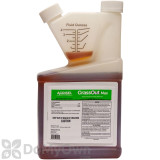
Grass Out Max (Clethodim Herbicide) is a grass killer and so it would also kill St. Augustine turf.
Please view our St. Augustine Lawn Article and also our Lawn Care Guides for more information on selective weed control safe for St. Augustine.
Yes, Grass Out Max (Clethodim Herbicide) is designed specifically for killing grassy weeds in ornamental areas without harming desirable flower beds, shrubs, and roses.
Please refer to the product Label for complete application instructions.
Grass Out Max (Clethodim Herbicide) is not labeled to kill poison hemlock. You can use Hi-Yield Selective Weed Killer which is labeled to kill poison hemlock.
Please view the product label for more information and application rates.
Grass Out Max (Clethodim Herbicide) is labeled to kill grasses in and around liriope without harming it. For spot application rates, you will use 0.2 to 0.4 fl oz in 0.5 to 1 gallon of water per 1000 sq ft.
Plese review the product label for more information.
While Grass Out Max (Clethodim Herbicide) is labeled for wheat, it does not specify Egyptian Wheat. We would recommend contacting the manufacturer directly
No, Grass Out Max (Clethodim Herbicide) is not OMRI approved. View the Natural & Organic Herbicides to find a product that s OMRI approved and meets your needs.
Grass Out Max (Clethodim Herbicide) is only labeled for tall fescue in prairie grasses and would not be recommended for treating Reed Canary grass. Unfortunately, a lot of the products specifically labeled for pastures are essentially non selective products which will require direct spot treatments to the canary grass directly.
Roundup Custom Aquatic Terrestrial Herbicide is labeled for Reed Canary grass at the rate of 1.5 to 2.3 quarts per acre or 1 fl oz per gallon of water, 1.5 pts per 25 gallons of water. If this prairie pasture is used for grazing, there are no restrictions for livestock or grazing animals when applied at rates below 4.5 pints per acre. Please view the full product label for more information.
Yes, Grass Out Max (Clethodim Herbicide) is labeled to control weeds while being safe on clover. Please view the product label for more information and rates.
Grass Out Max (Clethodim Herbicide) would also injure/kill the St. Augustine while tyring to kill the bermudagrass due to them being so closely related.
The 2 options recommended for killing bermudagrass in St. Augustine would be to directly spot treat bermuda with a non selective glyphosate herbicide such as Roundup QuickPRO and then reseed any bare spots after 2 weeks.
The 2nd option would be to use the Recognition + Fusilade Combo that is formulated to safely treat bermudagrass without injuring St. Augustine. Please view the Supplemental Label for Removing Bermudagrass in St. Augustine provided by the manufactuer.
As long as your soil temperatures are above 55 degrees, you can proceed with applying Grass Out Max (Clethodim Herbicide). Generally you only need to wait 2-3 days in between applications so with it being 2 weeks, that is plenty of time
Grass Out Max (Clethodim Herbicide) should have atleast 1 hr before any rainfall is expected or before irrigating the treated areas.
Per the product label, for best results – weeds should be actively growing and there is favorable soil moisture and humidity. In regions where the land is excesively dry or receives very little to no rainfall, it is suggested to irrigate within a couple days after rainfall or within 7 days after irrigating when moisture is in the soil.