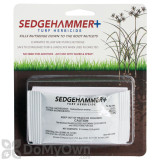
SedgeHammer Herbicide is considered a post-emergent, therefore the weeds need to be actively growing in order for this product to work successfully. Please let us know if we can be of any further assistance.
You can use a spray indicator when applying herbicides like SedgeHammer Herbicide. We would recommend using a product that is specifically made for this use to ensure that it does not interfere with the efficacy of the herbicide. You can browse our Spray Indicators here.
If you have SedgeHammer Herbicide in the packets, you do not need to measure anything as the packets are pre-measured. If you have SedgeHammer in the 1.33 oz. bottle and have lost the spoon, we can contact the manufacturer to see if we can have a new spoon sent to you. Without the spoon you likely would need a scale that can measure in grams. If you would like us to try and send you the spoon just email us back with your address, or you can contact the manufacturer directly at 800-883-1844.
Sedgehammer Herbicide is applied to the foliage of the nutsedge or other labeled weeds you are targeting.
According to the manufacturer, after applying Sedgehammer Herbcide it is recommended to wait 2 weeks to overseed on existing lawns and 4 weeks on bare ground lawns (dirt).
SedgeHammer Herbicide should not be applied around groundcovers, ornamentals, vegetables, shrubs, trees, or flowers. It is to be applied to turf areas only. You can look at using a product like Image Kills Nutsedge Concentrate as it is labeled to be applied to Liriope.
No, you do not have to pull the weeds after applying SedgeHammer Herbicide, however, continually removing shoots eventually depletes the energy source reserves in the tubers. Tubers are key to nutsedge survival. If you can limit production of tubers, you’ll eventually control the nutsedge itself.
SedgeHammer Herbicide can be applied 4 weeks after seeding.
SedgeHammer Herbicide will work in a succulent bed, but you would want to be careful not to let the product touch any of the plants, so you would only need to do spot treatments. The product may do damage to the succulents if it were to get on them.
Sedgehammer Herbicide should not be used over any desirable ornamental plants, including roses. You could spot treat with a product like Roundup in the area.
SedgeHammer Herbicide is not labeled to be used in food plots and is not labeled to control clover. We currently do not have a product labeled to be used in food plots for clover. Most of the time you have to spot treat where the sedge is coming up with a glyphosate based product like the Glyphosel Pro being careful to spray as little of the clover as possible.
SedgeHammer Herbicide would not be recommended to be mixed with other herbicides.
We would not recommend tank mixing SedgeHammer Herbicide with something like Trimec as the Sedgehammer requires a surfactant to use and Trimec does not. Using one with Trimec could cause injury to your lawn since it already contains one and does not need any additional.