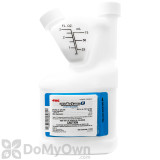
It is recommended that Talstar P not be used within 3 feet or outside the drip zone of edibles, which ever one applies.
Yes, Talstar P can be used with a garden hose end sprayer. Be sure to change the settings on the hose end sprayer to ensure you are mixing the correct amount.
Per the Talstar P label, when applying mixed solution, the applicator needs to wear shirt, shoes, socks, pants and waterproof gloves. If applying in a non-ventilated area, applicator will need to wear a resperatory mask. You may look at our Basic Safety Kit for the necessary protective gear.
Talstar P is labeled to be sprayed around ornamentals and in landscaped areas. So it should be safe for the arborvitae that you are asking about. As with any new area of spraying we suggest that you do a small test area just to be sure that it is tolerant of the product before doing a complete broadcast over the entire area.
Talstar P (Talstar One) does not kill by transfer. Talstar P (Talstar One) will kill the bees after they contact the solution. This can take hours after contacting the treated area. It likley will not eliminate the entire nest. We would recommend a product like Delta Dust in which the adults will carry into the nest to the larvae.
Talstar P are one of the most effective chinch bug treatments on the market. Chinch bugs infest the base of grass plants and are often found in the thatch layer. Chinch bugs can be one of the most difficult pests to control in grasses and the higher applications rates will be required to control populations that contain both nymphs and adults during the summer. It may also be necessary to remove the thatch layer if it exceeds 1 inch in thickness to allow the Talstar to penetrate down to the soil.
If you have a few small spots the St. Augustine runners might fill it in this season (of course water, fertilizer, and lots of sunshine helps). If large portions of the lawn were damaged it will likely be late spring or later of next year before the lawn recovers. Very heavily damaged areas may need to be resodded.
Unfortunately, Talstar P is not labeled to treat for fruit flies. Getting rid of fruit flies doesn't have to be diffucult. The most important step is to be sure that you discard or refrigerate any ripe produce as insects are naturally drawn to overripe, rotting, and spoled produce. Regularly rinse out and clean gargabe cans and recycling bins. Most times doing these small little things will take care of the problem. However, should you need to use a product to help you get rid of them one of the best ways to kill fruit flies is to use a fuit fly trap like the Vector 960 Furit Fly Trap. These have attractants in them that attract the fruit flies to them, and once they are inside they cannot get out. You can also use an aerosol product to help with the populations as well like 565 Plus XLO.
Yes, Talstar P can be used on areas where grass was just planted. This product will not affect the growth of seeds.
Once you have added Talstar to the water for your mixed solution it should be used within 24 hours. It is not recommended to leave any solution in a sprayer for longer than that as it will loose effectivness.
Talstar P will midges and mosquitos that contact a treated surface long enough to receive a lethal dose. It will dry clear and will not harm pait or surfaces when used as directed on the product label.
Talstar P (Talstar One) is mixed at 1 oz per gallon per 1,000 sq ft. You will need approx. 44 fl oz to cover an acre (43,560 sq ft). It will offer a 90 day interior residual and 30 day exterior residual.
The 0.12 percentage of Talstar could vary depending on how many gallons the company mixed up. Per the product label it could equal 0.19 - 0.2 fl oz.
Talstar P (Talstar One) should be applied at 1 fl oz per gallon of water so 30 fl oz per 30 gallons of water.
No, unfortunately Talstar P (Talstar One) is not labeled for application directly into a vent as this could result in the insecticide making its way through your air vents and you could possibly inhale the product and breathe it in. If you feel that roaches are coming from your neighbor's apt we would suggest using a bait right outside of your vents. You could use Maxforce FC Magnum or any of the other excellent roach bait gels that we sell.
A parasitic wasp is a beneficial wasp that uses other insects including aphids, beetles, caterpillars, flies, sawflies, scale insects and true bugs as hosts into or onto which it lays its eggs. The development of the wasp eggs will usually kill the host insect. Parasitic wasps are considered beneficial insects for the natural control of many pest insects that they provide. A number of parasitic wasp species are commercially available from insectaries.
Talstar P is a great choice for treating the interior and exterior of most buildings and will eliminate over 75 different insect pests. Talstar P is diluted with water as specified by the product label and applied using a hand pump sprayer. Spray directly on baseboards, window frames, door frames, and places where utilities (pipes, wires, cables) enter in to the building and any other crack, crevice or gap where insects can enter.
Unfortunately, there is not another product that is comparable to Talstar P for Japanese Beetles that can be shipped to New York. We recommend that you contact your local cooperative extension office for recommendations.