Termidor FOAM - Questions & Answers

Displaying 101 to 107 (of 107 questions)
Sort:
  • Asked by John from Tucson, Az
    07/13/2013
    Q
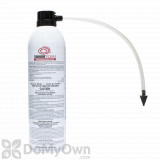
    Does the Termidor Foam come with the required actuator?
    A
    Yes, the Termidor Foam comes with all parts (including actuator) required to operate and foam into any void where there is an active infestation. No other parts are required to be purchased in order to utilize this product.
    Was this answer helpful to you?   Yes No
    21 of 22 people found this answer helpful.
  • Asked by Tsuning from Morrisville, Nc
    07/05/2013
    Q
    How to treat the active termites inside the house that is in an exterior walls?
    I found termites inside my house by the windows at my exterior wall there are insulation in the wall. How do I tread the termites that is in the wall, and how much do I need for a 10X10 room?
    A
    You will need to determine what kind of termite you have for us to direct you on the best treatment method. If you have drywood termites, you could drill holes into the galleries and inject a product like Termidor Foam to expand and eliminate the colony. You will only be injecting the foam into the studs and around where the activity is, not filling the entire wall void. It would be hard to determine exactly how many cans you would need withouth knowing where you are primarily seeing activity. If you have subterranean termites, you will need to do a trench treatment around the home to eliminate the colony in the ground with a product like Termidor SC. Termidor SC will last in the soil for at least 10 years to both eliminate your current termites and prevent any new ones from entering the home. The Termidor SC trench treatment would kill the existing termites in the wall of your home as well, but you could always do a spot treatment with the Termidor Foam to help speed up the process along with the trench treament. You can see how a homeowner can treat there home for subterranean termites in our article "How To Do A Termite Treatment". There are many variables that go into treating your home for termites so it may be easier to call our customer service staff at 1-866-581-7378 for better instruction to meet the needs of you and your home.
    Was this answer helpful to you?   Yes No
    19 of 21 people found this answer helpful.
  • Asked by Cecilia from Howell, Nj
    05/14/2013
    Q
    Can you help with the math for my Termidor FOAM application?
    Interior wall, no insulation, 3” studs spaced 16” apart. So 1 oz. makes approximately 1 quart of foam. 1 quart of foam would fill how many cubic inches? In other words, how many quarts of foam would it take to treat a 12”H x 16”W x 3”D wall void? Do I need to fill an entire wall void from floor to ceiling if I'm just seeing carpenter ant activity at the bottom of the wall? Thank you for your input.
    A

    If there is no insulation in the wall then there's not many reasons for them to be in that wall void as the insulation would provide an area to nest. They may travel behind the wall voids but the main nest will not be behind it. They will most likely be using the studs as a food source and traveling up the sides of the studs. You will not foam the entire void, rather you will drill a hole close to the top of the ceiling/stud on either side of the stud. Once the holes are in place on each side, inject the foam into each hole for 5-10 seconds, allowing the foam to expand but slide down the sides of the studs where they would travel. If you are seeing them along the baseboard areas, drill holes every 8-10 inches apart across the area between studs, about an inch or 2 above the baseboard. Use the same injection rate for each hole and let dry. The Termidor Foam has some residual for about a month after it dissipates so if any are missed in the initial application the rest of the colony should be affected.

    Was this answer helpful to you?   Yes No
    109 of 118 people found this answer helpful.
  • Asked by Dave from Kapaa,hi
    04/17/2013
    Q
    How can I get rid of subterranean termites in posts inside my house?
    A
    You can directly treat the nests by drilling into the posts and applying a product such as Termidor Foam. Where in your home are these posts located?
    Was this answer helpful to you?   Yes No
    1 of 1 people found this answer helpful.
  • Asked by Eric from Tampa, Florida
    04/04/2013
    Q
    How long will the effects of the Termidor foam remains active if I inject the foam into the exterior walls?
    I have the base boards removed and see the remnants of the subterianian termites. I plan on drilling holes into the drywall before I replace the base boards and have had a professional company treat the perimiter of my home with termidor. They explained to me that treating the perimiter of the house will also kill the ones that have already entered my home. I really don't belive that and haven't found that info anywhere on the internet.
    A
    Termidor Foam will remain active for about 6 weeks when injected into the walls. Termidor Sc placed in a barrier around a home will kill foraging termites as they return to the colony....if the colony is not under the home (in most cases the colony will be out in the yard so this method does usually work). It is recommended that if you know where the termites are active in the wall void that you treat the area with a product like the Termidor foam just in case the main colony is under the house.
    Was this answer helpful to you?   Yes No
    98 of 101 people found this answer helpful.
  • Asked by Erin from Marietta,ga
    03/17/2013
    Q
    I have ants in my bathroom, will Termidor Foam work for me?
    A
    Termidor Foam will certainly take care of an ant infestation when used as directed on the product label in cracks, crevices and voids. You can expect it to take about 3 weeks to see full results.
    Was this answer helpful to you?   Yes No
    19 of 21 people found this answer helpful.
  • Asked by Aaron from Phoenix, Az
    01/29/2013
    Q
    How can I Spot Treat for termites?
    I treated the preimeter with dominion 2L and it knocked down termites quickly. fast forward 3 months and I see new mud tubes in celing again? should I do an additional perimer treatment and do a spot treat (different product?) in attic crawl space or is there another prefered method I should follow?
    A
    If the termites made it indoors then they must have bypassed the trenching treatment form a few months ago. There could be a few different scenarios going on here. 1. the perimeter treatment was somehow disturbed or was not placed completely around the structure and the termites entered through a non-treated area (in this situation you would likely see mud tubes around the exterior of the structure and you should trench and treat accordingly) 2. You have a crawlspace and you did not treat the interior of the crawlspace (in this situation you may see mud tunnels on the interior of the crawlspace or around pipes or piers and you should follow the Dominion product label and treat the crawlspace) 3. The termite colony was under the home and they entered through a hidden crack in the slab or around a pipe or other entry way. (probably will not see the mud tubs as they would likely be in voids) We recommend that you directly treat the infested area with something like Termidor foam and treat accordingly with Dominion 2L if needed in the situations listed above.
    Was this answer helpful to you?   Yes No
    19 of 20 people found this answer helpful.
Displaying 101 to 107 (of 107 questions)