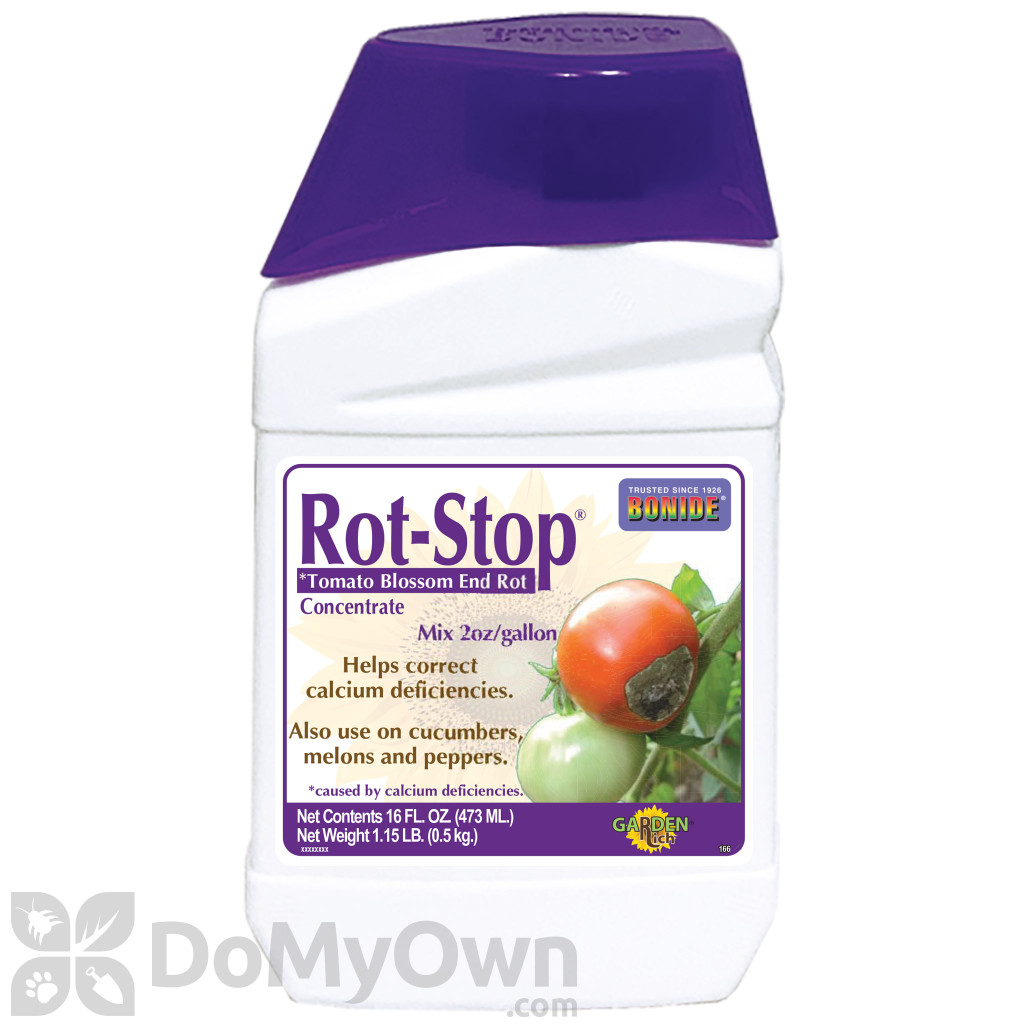
Bonide Rot-Stop Tomato Blossom End Rot helps to correct a disorder in plants caused by a lack of calcium. Blossom end rot is visible on the end of the fruit as a sunken brown spot opposite the stem. Use Bonide Rot-Stop Tomato Blossom End Rot to provide the nutritional calcium needed for developing fruit or after periods of heavy rain. Bonide Rot-Stop Tomato Blossom End Rot can be used on tomatoes, peppers, melons, cucumbers, and other listed vegetables.
Tomato blossom end rot is a disorder caused by calcium deficiency. The disorder can be aggravated by the application of too much nitrogen fertilizer to plants.
Have had blossom end rot problem with my tomato plants for the last two years...after a week's applications no further tomato damage...would strongly recommend this product!
I bought the rot-stop to add calcium to my soil for watermelons that were growing to an inch long, turning black and dying. After using rot-stop my watermelons are now developing and I have more than the past two years. I also use it on my tomatoes and those plants look fantastic with many tomatoes. I will start harvesting the first ones next week and so far no end rot.
What are the other inactive ingredients in Bonide Rot-Stop Tomato Blossom End Rot?
A
We contacted the manufacturer and they informed us that the active ingredient contained in the Bonide Rot-Stop product is not allowed in organic garden. They could not share the information on the inactive ingredient as that is proprietary information that the manufacturer will not share with anyone, including Do My Own Pest Control.
My tomatoes have Blossom End Rot, and I heard that it helps to use a 4-12-4 fertilizer. What would you suggest?
A
Blossom end rot is caused by a calcium deficiency which can be aggravated by too much nitrogen in the soil. So it's not generally recommended to add any additional nitrogen when treating for end rot. Bonide Rot-Stop Tomato Blossom End Rot is our most popular product for blossom end rot.



 Verified Purchase

