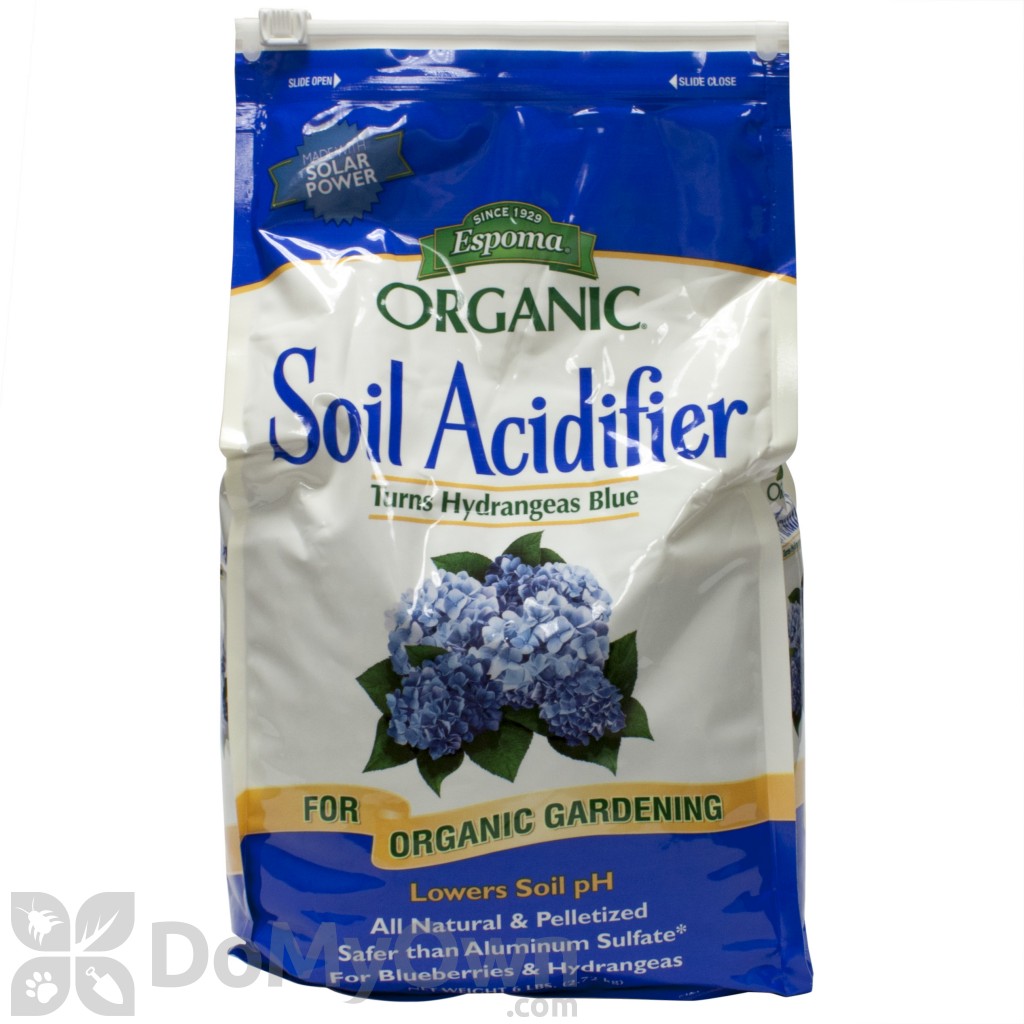
Espoma Soil Acidifier is one of the best soil acidifier on the market today. It contains all-natural ingredients that effectively acidify or lower the pH of the soil, and is used to correct the alkaline soil's problem. This can turn hydrangeas from pink to blue color, and it also helps with the growth and dark greening of plants. It has a low salt index so it will not burn your plants and it's non-hazardous and non-toxic so it's safe to use around children and pets.
Espoma Soil Acidifier can provide sulfur all-season long when you use it regularly as a part of your fertilization program. A soil analysis is always recommended to know the proper rate of application. This product weighs 6 pounds and it is packed in an easy-to-open bag. One pound is equivalent to approximately 2 cupfuls.
Hydrangeas, Blueberries and all Soil of Shrubs or Plants that need Acidic Soil
Application
Hydrangeas and Blueberries: 1 1/4 to 2 1/2 cups Broadcast Rate: Apply 12 lbs per 100 sq. ft. for 1 point reduction in soil pH Container Rate: 1 tsp for each 4" pot diameter * See label for complete application instructions
Espoma Soil Acidifier helps lower soil pH for acid-loving plants like hydrangeas, blueberries, azaleas, rhododendrons, and blackberries. It can be used in flower beds, gardens, and landscaped areas to encourage healthier growth, deeper green foliage, and more vibrant blooms. Regular applications can also help maintain blue hydrangea flowers in alkaline soils.
What Plants Can Espoma Soil Acidifier Be Used On?
Espoma Soil Acidifier is designed for acid-loving plants that grow best in lower-pH soil conditions. It can be used in flower beds, berry gardens, ornamental landscapes, and around trees and shrubs that require acidic soil for optimal growth.
Common plants that benefit from Espoma Soil Acidifier include:
Hydrangeas
Blueberries
Blackberries
Raspberries
Strawberries
Azaleas
Rhododendrons
Camellias
Gardenias
Hollies
Dogwoods
Ferns
Mountain Laurel
Pieris
Pines
Spruces
Other acid-loving plants and shrubs
Always check the product label for complete application instructions and a full list of plants that may benefit from soil acidification.
When Is the Best Time to Apply Espoma Soil Acidifier?
The best time to apply Espoma Soil Acidifier is during the active growing season, typically from spring through early fall. Applying before new growth begins or when plants show signs of nutrient deficiency can help improve results. For hydrangeas and berry-producing plants, consistent seasonal applications may help support stronger blooms and increased yields.
Where Should You Apply Espoma Soil Acidifier?
Espoma Soil Acidifier should be applied evenly around the drip line or root zone of the plant, avoiding direct contact with stems or trunks. Water the area lightly after application to help move the granules into the soil. It can be used in garden beds, landscaped areas, around shrubs, and near berry-producing plants where acidic soil conditions are beneficial.
Can You Mix Espoma Soil Acidifier With Water?
No, Espoma Soil Acidifier should not be dissolved or mixed with water before application. The product is designed to be applied as granules and sprinkled directly around the plants or over the soil surface according to label directions. After application, lightly water the area to help move the product into the soil.
How Often Should Espoma Soil Acidifier Be Applied?
Espoma Soil Acidifier is typically applied every 30 to 60 days during the growing season, or as needed based on soil conditions and plant health. Frequency may vary depending on your soil pH, rainfall, irrigation, and the needs of your plants. Testing your soil periodically can help determine how often additional applications are necessary.
Can Espoma Soil Acidifier Help Hydrangeas Stay Blue?
Yes, Espoma Soil Acidifier is commonly used to help maintain blue hydrangea blooms. Blue hydrangeas require acidic soil conditions to retain their blue coloration. Applying Espoma Soil Acidifier can help lower the soil pH over time, especially in areas with naturally alkaline soil. For best results, apply the granules around the root zone as directed on the product label and monitor soil pH periodically.
How to Apply Espoma Soil Acidifier
One pound equals approximately 2 cups
ForHydrangeas & Blueberries
Apply in the spring to help lower soil pH.
New plants: Use 1-1/4 cups
Established plants: Use 2-1/2 cups
Spread evenly around the plant out to the drip line and water well. Repeat in 60-day intervals until the desired soil pH or bloom color is achieved.
Broadcast Rates
Apply 12 lbs. per 100 sq. ft. for each one-point reduction in soil pH desired. For heavy clay soils, increase the rate to 15 lbs. per 100 sq. ft. Gradual reduction in soil pH is preferred, as dramatic reductions can stress plants.
Container Applications
Add 1 tablespoon for every 4 inches of pot diameter.
Always read and follow the complete product label for application rates, timing, and plant-specific instructions.
How much of the sulfur should I use to improve its growth? It is planted in a container since the winters in VA are very cold. I believe I live in Zone 6-7. I have kept it on my porch away from direct sunlight. Any advice would be appreciated! Thanks!
A
We apologize but we just started carrying this product and do not see that it instructions for use on Gardenias. We would recommend contacting the manufacturer directly for this question, The Epsoma Company can be reached at 888-377-6621.