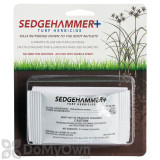
SedgeHammer Herbicide has a shelf life of about 5 – 7 years if kept out of extreme temperatures and direct sunlight. Nothing below freezing or above 90. Typically it is best kept in a cool dry place inside.
SedgeHammer Herbicide is not labeled for clover or creeping charlie.
SedgeHammer Herbicide can be applied to fine and tall fescue, creeping bentgrass, kentucky bluegrass and perennial ryegrass.
For nutsedge control it is best treated using something like Sedgehammer Herbicide which is specifically designed for it and is also for some other broadleaf weeds. For signal grass is it best treated with a pre-emergent like Prodiamine 65 WDG but complete control is not always possible with this weed as it is a very difficult weed to control. You could also spot treat with a glyphosate based product like GlyPhoSel Pro and then reseed/so the area. The University of Florida has some information here about.
SedgeHammer Herbicide should not be used on pastures or grazing areas, and you should not treat around hay that will be used for animal feed. The SedgeHammer should not affect Timothy grass that may be contacted by the herbicide, although the product label does not specify information about this plant, so we would recommend spot treating a small area first before applying over a large area with this plant. The 1.33 oz bottle of SedgeHammer will yield about 40 gallons of finished solution. You should add 2 teaspoons of a non-ionic surfactant per gallon of water when diluting SedgeHammer from the larger bottle. The smaller packets already have a surfactant mixed in with the product.