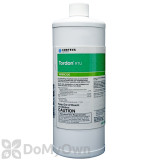
Tordon RTU Specialty Herbicide is not labeled to control willow sprouts, so we are not sure if it would be effective for this application. We do sell other products such as Fertilome Brush Killer and Stump Killer that can be used to treat willow sprouts. You would cut the stumps and apply the product undiluted to the fresh cuts.
We would recommend using Remedy Ultra Herbicide. It is labeled for honey locust, as well as various other woody brush as well.
Foliar: Only apply to plants that are in full leaf during application
Basal Bark: 20 to 30 gallons with oil to make 100 gallons and Spray Plant and Tree Trunks 12 to 15 inches from the ground until fully wet
Cut Stump: 20 to 30 gallons with oil to make 100 gallons and Spray the Root Collar area, Sides of the Stump, and the Outer Portion of the Cut Surface, until fully wet
Unfortunately, Tordon RTU Specialty Herbicide is not labeled to be used on pastures where animals graze. We would recommend a product like GrazonNext HL Herbicide which is labeled to be used in pastures with no grazing restrictions.
Tordon RTU Specialty Herbicide is not labeled to be poured around the base of a tree as a drench. This product can be applied three ways; Tree Injection Treatment, Frill or Girdle Treatment & Stump Treatment.
Tree Injection Treatment: Use 1 milliliter of undiluted Tordon RTU solution through the bark
completely around the tree trunk at intervals of 2 to 3 inches between
edges of the injector wounds. Make injections near ground level when
using the tree injector or 2 to 4 feet above the ground when using a
Hypohatchet Injector or similar device. Treatments can be made in any
season. Maples should not be treated during the spring sap flow. With
some difficult to control species such as dogwood, hickory, sugar maple,
bigleaf maple, tanoak, and some firs, application to a continuous cut
rather than to spaced cuts may be more uniformly effective.
Frill or Girdle Treatment: Make a single hack girdle or "frill" of overlapping ax cuts through the bark
completely around the tree as close to the ground as feasible. Spray or
paint the injured surface with undiluted Tordon RTU, using enough volume
to wet treated areas.
Stump Treatment: Spray or paint the cut surfaces of freshly cut stumps and stubs with
undiluted Tordon RTU. The cambium area next to the bark is the most
vital area to wet.
Tordon RTU is not labeled for poison ivy. We would recommend using something like Bonide Poison Oak & Ivy Killer RTU instead.
Tordon RTU Specialty Herbicide is not labeled to control trumpet vine. It looks like this vine is best controlled with a glyphosate or triclopyr based product.
According to the Tordon RTU Specialty Herbicide product label, this product may be toxic to fish and aquatic invertebrates. It should not be applied directly to water or areas where surface water is present.
Tordon RTU Specialty Herbicide is not labeled for use around edible plants, and it would kill the raspberries. You most likely will need to hand-pull the weeds from this area.
Yes, you can go ahead and bury the treated stump. Be aware the half life of Tordon RTU Specialty Herbicide is up to 2 years in the soil.
Tordon RTU Specialty Herbicide is a very damaging product to surrounding plants due to it’s active ingredient, Picloram. Untreated trees/plants can occasionally be affected by root uptake of herbicide through movement into the the topsoil or by excretion of the product from the roots of nearby treated trees. We recommend contacting the manufacturer Dow AgroSciences at 800-992-5994 for advice on what to do at this time.
Only cherry is listed the label of Tordon RTU Specialty Herbicide for being controlled by it so the others may not be effected by it. If needed another application can be made to the cherry after 30 days. How long it takes to completely kill a tree depends on the size of the tree and health so it may take longer than 3 weeks.
Tordon RTU Specialty Herbicide is not labeled for buckthorn. Crossbow or RoundUp can be used to kill cut stumps. Apply immediately after cutting the stump to prevent resprouting. There is a great article here from the Dept of Natural Resources in Minnesota that may be helpful.
Tordon RTU Specialty Herbicide can affect any roots that are in the area it is applied to. Do not apply Tordon RTU within the root zone of desirable trees/plants unless such injury can be tolerated
Because Tordon RTU Specialty Herbicide is a ready to use herbicide it should not be diluted. Doing so may decrease its effectiveness.
Tordon RTU Specialty Herbicide is best applied to fresh cut stumps, so you can either make a fresh cut or you can drill new holes and then apply. Since the active ingredient in Tordon RTU is known to leach into the soil from treated roots and can remain for several years you would need to completely replace any soil in the area before planting anything else. Untreated trees/plants can occasionally be affected by root uptake of herbicide through movement into the the topsoil or by excretion of the product from the roots of nearby treated trees. Do not apply Tordon RTU within the root zone of desireables unless such injury can be tolerated.
No, Tordon RTU Herbicide is not labeled for ficus bushes or trees. We would recommend using something like Fertilome Brush Killer and Stump Killer to eliminate ficus trees. You will cut the tree down and apply the product directly to stump undiluted.
Tordon RTU Specialty Herbicide would not be used to treat the roots of the pecan to kill it. There are instructions on the product label for injecting into the tree, frill or girdle treatment, or treating the cut stump after cutting the tree down (which is usually what is recommended).
Tordon RTU Specialty Herbicide does work best on freshly cut stumps or fresh cuts in trees.
The use of Tordon RTU Specialty Herbicide depends on what type of plants/trees you are trying to kill. We would recommend using something like Fertilome Brush Killer and Stump Killer to eliminate small trees. You will cut the tree down and apply the product directly to stump undiluted.
Tordon RTU Specialty Herbicide is not labeled specifically to control prickly pear or other cacti, but some articles recommend this active ingredient to aid in control. One very difficult part of controlling this plant is that all debris must be removed from the area to prevent resprouting. Unfortunately, we do not have any herbicides currently labeled to control cactus. This Field Guide from the USDA discusses control methods for prickly pear cactus. Another active ingredient mentioned is Fluroxypyr, which we do have in the product E-2 Herbicide. We recommend consulting your local Cooperative Extension office for assistance. Since this is a heavily invasive species of importance, most local offices will want to know where the plant is being found.