






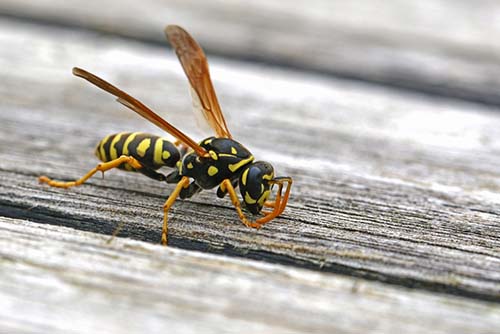
Different types of wasps and hornets, including yellow jackets, paper wasps, mud daubers, and European hornets, have distinct markings and characteristics that can help you tell them apart.
Wasps typically have slender bodies, narrow waists, six legs, two antennae, and two sets of wings, with colors ranging from black and red to yellow or metallic blue. Hornets share many of these characteristics but are generally identified by differences in their species-specific features. To identify a wasp or hornet, look at its size, body shape, color and markings.
Although wasps and hornets are different species of pests, they are commonly associated together, and the same methods are used to get rid of both.
Yellow jackets are among the most common species of wasps in the United States, along with paper wasps, red wasps, mud daubers, and ground wasps. Wasps vary in appearance based on species but do share some common characteristics.
The European hornet is the only true hornet established in the United States, while many species of wasps live in there. Use this guide to determine if you have wasps, hornets, or other pests around your home or office. Then, read our guide on how to get rid of wasps and hornets for treatment options.





Wasp Identification Guide
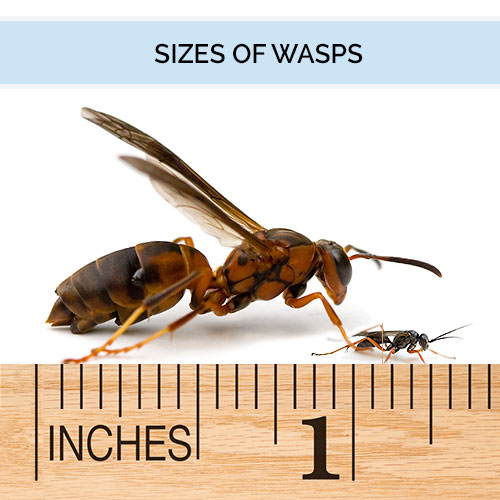
Wasps range in size depending on their age and species. Wasps are typically 1/4 inch to 1 inch long.
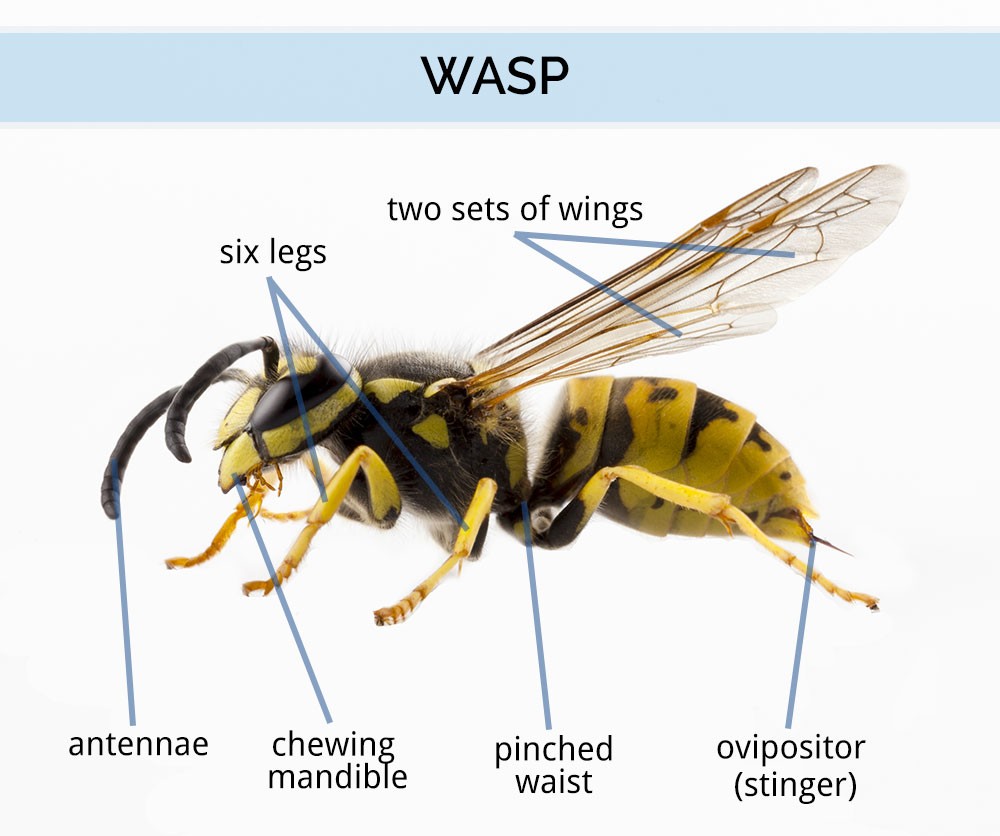
Wasps have 2 sets of wings and 6 legs. They have antennae and "pinched-in" or hourglass waists. They also have chewing mouthparts (mandibles) to chew prey and other food sources.
Female wasps have stingers (ovipositors) which are used to lay eggs. They will also use the ovipositor to sting when threatened.
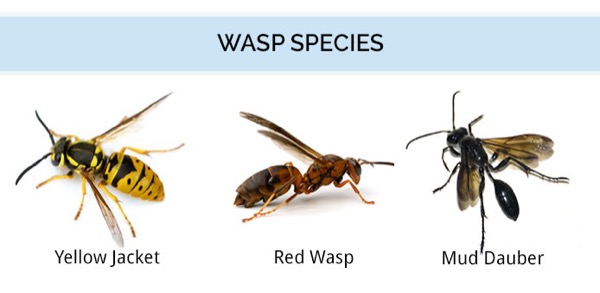
Wasps vary in color, from a metallic blue to a dull red to solid black.
Red wasps, like their name implies, are red.
Mud Dauber wasps are black.
Yellow jackets are most commonly known for their yellow and black striped bodies. Read our yellow jacket identification guide to learn more.

Hornet Identification Guide
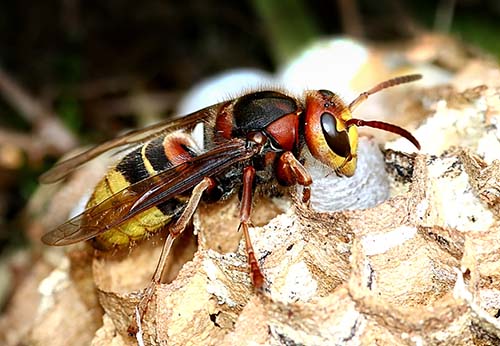
The European hornet is the only species of hornet to live in the United States. The term "hornet" is commonly used for species such as the bald-faced hornet, but it is actually a type of yellowjacket wasp rather than a true hornet.
- The European hornet can grow to be 1.5 inches long
- Like wasps, the hornet has 2 sets of wings, 6 legs, 2 antennae, and a pinched-in waist
- European hornets are brown with yellow and orange stripes. Their wings are gold-brown.
- European hornets can sting many times as their stingers are not barbed
- European hornets can be found across the United States
If you have wasps or hornets, read our guide on how to find a wasp or hornet nest to identify the source of the pests. Click the right arrow below to learn more.