




Overview
Check Periodically for Signs of Rats

Rats can be active year round so checking for signs of rats invading your home or business periodically can help you catch a rat infestation early. The earlier you catch a rat infestation the faster you will be able to get rid of them. Typically rats will inhabit the area immediately around a structure but will eventually try to find their way inside. Inspections usually start outdoors and should continue indoors when any evidence of rats has been found. If rats are already known to be inside, inspecting outdoors can help determine where the rats are gaining entry.
Select a method below to learn about how to inspect for rats or continue reading to learn how to find them both ways.
Step
1
Outdoor Rat Inspection
Signs of Rats Outside

In outdoor areas you will be looking for signs of rats in dark areas, under decks, in bushes, around doors and windows, in wood piles, in gathered yard debris and other areas you suspect rats may be hiding. Here is a list of signs rats may be taking up residence on your property:
- Droppings - Rat feces or droppings are brown, cylindrical pellets that are usually about 1/2 -1 inch long and about 1/8" in diameter. Watch for rat droppings around pet food dishes, pet food storage, or recycling bins.
- Burrows - Rats can dig burrows along structure foundations and walls, around plants, bushes, shrubs and around and under yard debris. They may also burrow under compost piles or garbage cans. The entrance/exit holes of burrows are typically 2-4 inches in diameter and are usually smooth from repeatedly being walked on and rubbed by the rat's belly.
- Runways - Rats prefer to use the same path over and over to get from nesting areas to food and water sources. This repeated use of the path will create "runways" that will be noticeable. Look for areas where grasses have been pushed down or there are small pathway depressions in soil or mulch. Watch for rats traveling along utility lines or on the tops of fences at dusk or soon after.
- Gnaw Marks - Rats teeth grow quickly as they constantly gnaw on hard objects usually to gain entry to new harborage areas or in search for food. Look for wood and pipes that show indications of gnawing. You may also spot evidence of rodents feeding on fruits or nuts that fall from trees in your yard.
- Carcasses - If rats live outdoors around your home, you may find carcasses brought home by pet dogs or cats, or drowned rats in swimming pools or hot tubs.
Step
2
Indoor Rat Inspection
Signs of Rats In the House
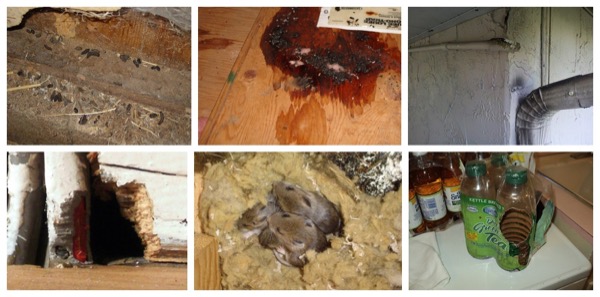
Once rats have moved indoors, especially in residential structures, people tend to become aware of the unwelcome guests quickly. Depending on the species, the rats will move into wall voids, attics, basements, cabinets or storage rooms. While they do not usually inhabit occupied rooms, it is possible, so all rooms should be inspected. There are several signs of a rat infestation to look for indoors:
- Droppings - Rat feces or droppings are brown, cylindrical pellets that are usually about 1/2 -1 inch long and about 1/8" in diameter.
- Urine - Rats urinate frequently and the urine has a pungent, musky odor. This will be most noticeable in the rat nesting area.
- Grease or rub marks - Rats like to travel with one side of their body rubbing against a vertical surface and since they travel the same path again and again, over time a greasy grey mark will be left behind. You should look for these marks on beams, rafters, baseboards, bottom of door frames and other areas where suspect activity.
- Gnaw Marks - Rats teeth grow quickly as they constantly gnaw on hard objects usually to gain entry to new harborage areas or in search for food. Look for wood and pipes that show indications of gnawing.
- Squeaking or gnawing sounds - While rats like to hide as much as possible they are rarely quiet intruders. When rats socialize they squeak quite a bit. Their gnawing activity can usually be heard as well. Following the sounds can help locate the nesting areas. Listen for noises from suspected nesting areas just after dusk.
- Food tampering - What do rats eat? Rats are scavengers and will eat most foods they can get access to, including fruits, vegetables, grains, meats and pet food. Rats will gnaw through food packages to obtain the food inside. Check food packages in pantries and pet food containers for evidence that rats have gnawed into the package or otherwise tampered with the food.
Pro Tip
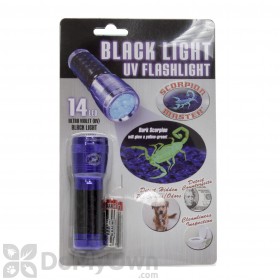
Rat urine is fluorescent and is visible under a blacklight. Pest control professionals frequently use a UV flashlight to help detect rodent urine. You can use this technique to see if rodents have been in your cabinets or other areas where you need to inspect.