


Price/Ea.
$13.78
Buy 2 or more: $12.27 each
Have a Question? Ask Our Pros!
Email Our Pros
We're here to help
Offline. Leave Us a Message
You May Also Need
-
Product Overview
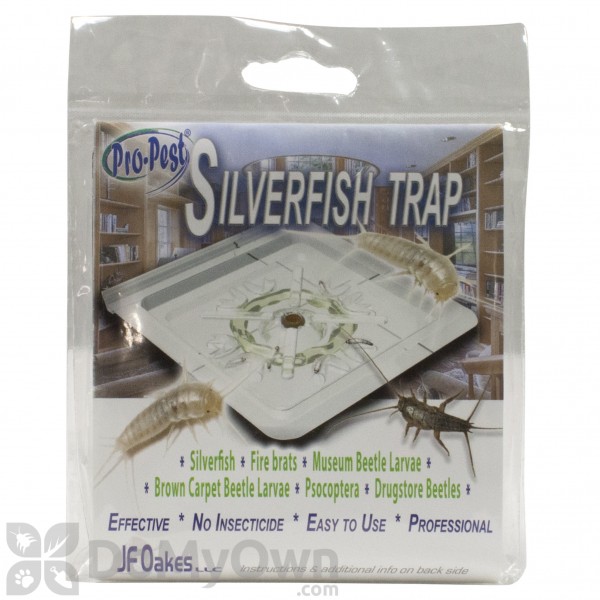
Pro Pest Silverfish Monitor and Trap is an effective and professional trap for silverfish, fire brats, musuem beetle larvae, brown carpet beetle larvae, psocoptera, and drugstore beetles. It contains no insecticide and pesticide. Made easy to use with 2 traps and 2 attractants in each package.
-
Details
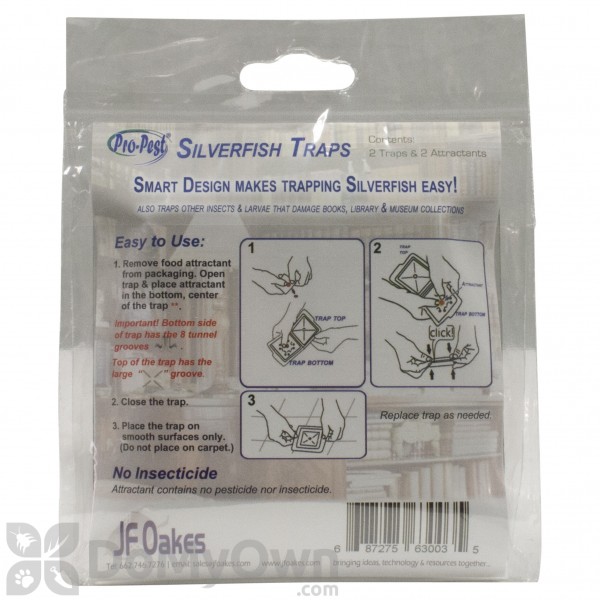
Target pests Silverfish, fire brats, museum beetle larvae, brown carpet beetle larvae, psocoptera, and drugstore beetles. Application 1. Remove food attractant from packaging. Open trap and place attractant in the bottom, center of the trap.
2. Close the trap.
3. Place the trap on smooth surface only. (Do not place on carpet.)
**IMPORTANT! Bottom side of trap has the 8 tunnel grooves. Top of the trap has the large "X" groove.Pet safe Yes, if followed by directions on the label. Dimensions 4.5 x 4.5 Shipping Weight 0.07 lbs Manufacturer J F Oakes (Mfg. Number: 63-10004) UPC 687275630035 -
Product Documents
-
Related Videos
-
1 Customer Reviews
Top Reviews
Entirely useless
By Bryce on 05/08/2020
 Verified Purchase
It was easy enough to set out, but the bait in the center was of no interest to my silverfish. They love paper, and just munch at the Dekko Silverfish Packs, and crowd into jars left with scraps of p…
Read Full Review » -
2 Questions & Answers
Helpful Q&A'sQIs the Pro Pest Silverfish Monitor and Trap safe?Is it safe for children?AThe ProPest Silverfish Monitor and Trap contains no insecticides, only a physical trap and a food attractant, so it should pose no risk to people or pets.
QHow do you stop silverfish from crawling in your bed?I keep my bed clothes washed, keep my room dusted and mopped. I put roach powder all around my bed even bay leaves. I sprayed roach spray and they still get in my bed.AWhat you are describing is not consistent with silverfish behavior. These insects gather in moist areas where is cardboard, paper, or similarly textured items like in or around wallpaper, stored paper…
Read Full Answer »What you are describing is not consistent with silverfish behavior. These insects gather in moist areas where is cardboard, paper, or similarly textured items like in or around wallpaper, stored papers, and bathrooms and attics. You may want to use some glue boards in the areas where you suspect the insect to help you catch and identify any insect pests in the area. If you are not able to identify a specific insect pest, then you may consider visiting a dermatologist and explaining the issue and they may conduct a skin scrape to look for parasites or run other tests to help find the nature of the issue. You may also consider using clear packing tape and lightly pressing it on your skin when you feel a bite to get a sample of the insect. You can then have tape inspected by an entomologist in your region (you can usually find entomologists at local universities). We wish you the best of luck in getting an insect identification and in finding relief soon!