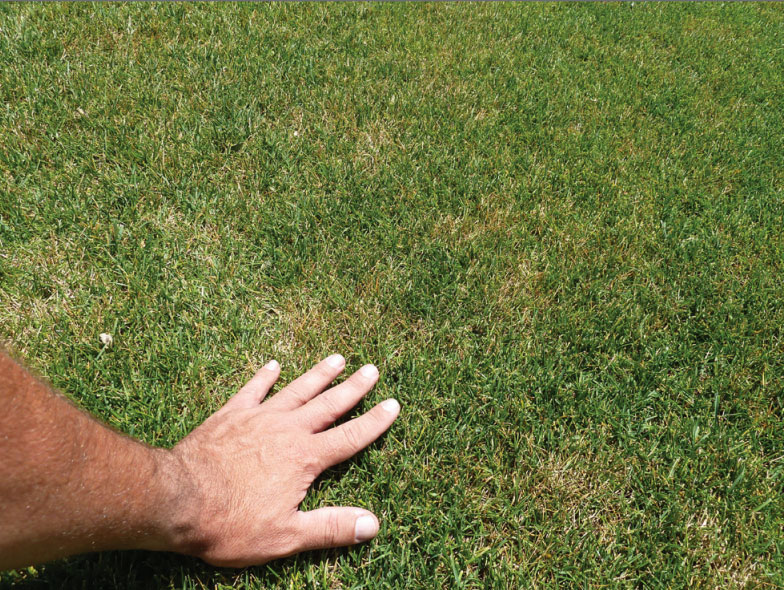
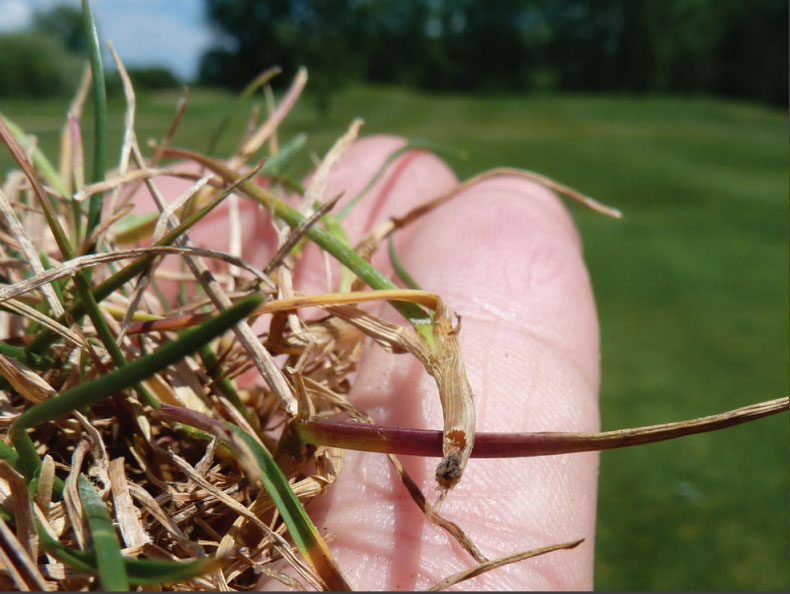
Billbug larvae can cause significant damage to your turf. Being able to recognize the signs of billbug activity in your yard will help you to take quick action to control billbugs before they cause extensive damage.
Step1
Look For Billbug Damage
Adult billbugs lay eggs in the crown of your turf in the spring, and the larvae will hatch and feed on the grass until late July or early August. The peak of this damage is usually in mid-summer, and this is when you will generally be able to notice the damage to your turf.
Billbug larvae begin feeding on grass blades, hollowing out the stems, which causes grass to turn yellow. As the larvae mature, they will move down to the crown and thatch, and may also eat the roots and root system of the grass.
Damaged grass will become discolored, and may appear in random spots throughout your yard, and grass will be easily pulled up. Extensive damage can kill grass.
Step2
Look For Frass That Resembles Sawdust
(To Confirm Billbug Infestation)
Billbug damage often gets mistaken for other lawn pests, diseases, or environmental stressors. Dollar spot disease or white grubs can often produce similar symptoms.
Billbug activity comes with another sign that can help differentiate billbug damage from other diseases, insect damage, etc. Billbug larvae produce frass, or excrement, that resembles sawdust. This moist, light brown material will be present in your turf near the crown, and will be a sign of billbug activity even if you do not see active billbug larvae.
Step3
Take Turf Samples
If you want to know whether you have an extensive billbug infestation, you can sample spots in your yard to assess the population and if it is worth treating.
Take about a 6 x 6 inch sample in at least four areas of your yard. Cut at least two inches into your soil and pull back the turf/soil sample to look at the crown/root area. You should be able to see the larvae if they are present, and if there is more than 6 per sample, treatment is usually necessary.