Price/Ea.
$144.66
Have a Question? Ask Our Pros!
Email Our Pros
We're here to help
Offline. Leave Us a Message
You May Also Need
-
Product Overview
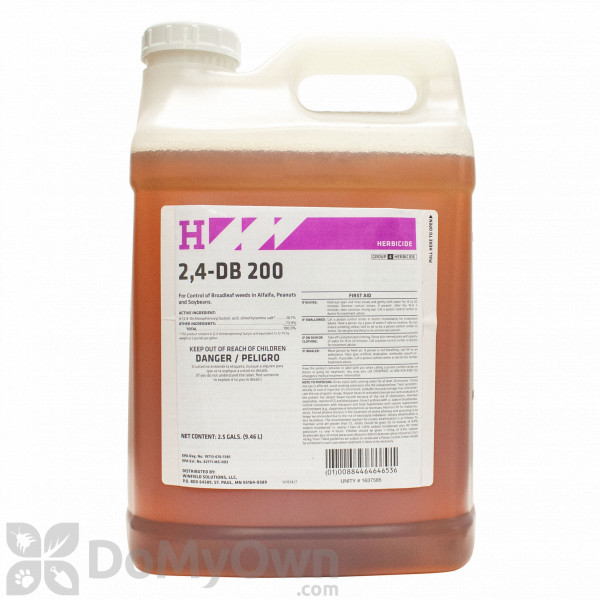
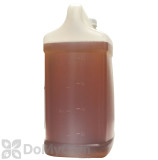
2,4-DB 200 Herbicide is a specially formulated herbicide that provides preemergent control of certain broadleaf weeds on alfalfa, peanuts, soybeans, birdsfoot trefoil, and other approved crops. It contains the active ingredient 2,4-DB which offers excellent and dependable control on troublesome weeds. Effective against Velvetleaf, Virginia copperleaf, teaweed, common ragweed, goatweed, lambsquarters, wild mustard, field pennycress, jimsonweed, devilsclaw, pigweed, morningglory, cocklebur, curled dock, Russian thistle, yellow rocket, smartweed, sicklepod, and more. Available in a 2.5-gallon jug.
-
Details
Active Ingredient 4-(2,4-dichlorophenoxy)butyric acid, dimethylamine salt - 25.9% Target pests Velvetleaf, Virginia copperleaf, teaweed, common ragweed, goatweed, lambsquarters, wild mustard, field pennycress, jimsonweed, devilsclaw, pigweed, morningglory, cocklebur, curled dock, Russian thistle, yellow rocket, smartweed, sicklepod. For use in Soybeans, Peanuts, Seedling and Established Alfalfa, and Seedling Birdsfoot Trefoil. Application For ground application, use a standard herbicide boom sprayer that provides uniform and accurate application. Sprayer should be equipped with screens no finer than 50 mesh in the nozzle tips and in-line strainers. Pet safe Yes, if used as directed on label. Formulation Liquid. NOT FOR SALE TO AK, CA, CT, DE, HI, MA, ME, NH, SC, VA, WV Special Features Effectively controls certain broadleaf weeds. Shipping Weight 23.60 lbs Manufacturer Winfield United CP (Mfg. Number: 180277) EPA Registration 1381-215 DIRECTIONS FOR USE:
CAUTIONS AND RESTRICTIONS
Do not apply 2,4-DB 200 through any type of irrigation system.
Do not use in or near a greenhouse.
Do not feed/graze soybean forage or harvest hay for 60 days following any 2,4-DB 200 application.
APPLICATION PROCEDURES:
2,4-DB 200 can be applied to registered use areas by ground and aerial application equipment. The following provides recommended methods of application for each crop.
GROUND APPLICATION:
Use a standard herbicide boom sprayer that provides uniform and accurate application. Sprayer should be equipped with screens no finer than 50 mesh in the nozzle tips and in-line strainers.
Select a spray volume and delivery system that will ensure thorough and uniform spray coverage. For optimum spray distribution and thorough coverage, use of flat fan nozzles (maximum tip size 8008) with a minimum spray pressure of 30 psi at the nozzle tips are recommended. Where the potential for drift is a problem, see the “Environmental Hazards” section for recommendations to reduce drift. Other nozzle types that produce course spray droplets may not provide adequate coverage of the weeds to ensure optimum control. Raindrop nozzles are not recommended as weed control with 2,4-DB 200 may be reduced. In general a minimum spray volume of 10 gallons per acre (GPA) is recommended for optimum spray coverage. When using higher speed equipment, a maximum speed of 10 mph is suggested if field conditions cause excessive boom movement during application and subsequent poor spray coverage. Ground applications made when dry, dusty field conditions exist may provide reduced weed control in wheel track areas.
AERIAL APPLICATION:
Use orifice discs, cores and nozzle types and arrangements that will provide for optimum spray distribution and maximum coverage. In general a minimum spray volume of 5 GPA and a maximum pressure of 40 psi are recommended. Where the potential for drift is a problem, see the “Environmental Hazards” section for recommendations to reduce drift.
MIXING INSTRUCTIONS:
2,4-DB 200 ALONE: Fill the spray tank 1/2 to 3/4 full with clean water. Begin agitation and add the recommended amount of 2,4- DB 200. Add water to the spray tank to the desired level. Maintain sufficient agitation to ensure a uniform spray mixture during application.
TANK MIXTURES: 2,4-DB 200 can be applied in tank mixture with other herbicides registered for use on approved crops. Refer to the specific crop section for rate directions and other restrictions. To apply 2,4-DB 200 in mixture with another product, fill the spray tank 1/2 to 3/4 full with clean water and begin agitation. If tankmixing with wettable powder, soluble powder, flowable or dry flowable products, add the powder or flowable product first. After the other herbicide is thoroughly mixed with water, add the recommended amount of 2,4-DB 200 and add water to the spray tank to the desired level. If tankmixing with other product types, add the 2,4-DB 200 first before adding the other product. Always mix one product in water thoroughly before adding another product or compatibility problems may occur. Never mix two products together without first mixing in water.
Maintain sufficient agitation while mixing and during application to ensure a uniform spray mixture. If spray mixture is allowed to remain without agitation for short periods of time, be sure to agitate until uniformly mixed before application.
SEE LABEL FOR COMPLETE RATES AND APPLICATION INSTRUCTIONS.
ENVIRONMENTAL HAZARDS:
This product is toxic to fish. Do not apply directly to water, to areas where surface water is present, or to intertidal areas below the mean high water mark. Drift and runoff from treated areas may be hazardous to aquatic organisms in neighboring areas. Do not contaminate water when disposing of equipment wash waters. Do not contaminate water intended for irrigation or domestic purposes. Do not apply when weather conditions favor drift from target area.
Groundwater Contamination: Most cases of ground water contamination involving phenoxy herbicides such as 2,4-DB have been associated with mixing/loading and disposal sites. Caution should be exercised when handling 2,4-DB pesticides at such sites to prevent contamination of ground water supplies. Use of closed systems for mixing or transferring this pesticide will reduce the probability of spills. Placement of the mixing/loading equipment on an impervious pad to contain spills will help prevent ground water contamination.
This chemical has properties and characteristics associated with chemicals detected in groundwater. The use of this chemical in areas where soils are permeable, particularly where the water table is shallow, may result in groundwater contamination. Application around a cistern or well may result in contamination of drinking water or groundwater.
Do not apply 2,4-DB 200 directly to or otherwise permit it to come in contact with cotton, okra, grapes, tomatoes, fruit trees, vegetables, flowers, or other desirable crop or ornamental plants. Do not permit spray mist to drift onto susceptible plants since very small quantities of the 2,4-DB 200 can cause severe injury during the growing or dormant periods. Use coarse sprays to minimize drift. Do not apply with nozzles that produce fine spray droplets.
Drift from ground application may be reduced by: (1) keeping the spray boom as near to the crop as possible in order to obtain complete coverage; (2) by applying 10 gallons or more of spray per acre; (3) by using no more than 20 pounds of pressure at the nozzle tips; and (4) by not spraying when wind exceeds 5 miles per hour.
Drift from aerial application may be reduced by: (1) applying as near to the target as possible to obtain adequate coverage; (2) by applying 5 or more gallons of spray per acre; (3) by using 20 pounds pressure or less at the nozzle tips; (4) by using nozzles which produce a coarse spray pattern; (5) by spraying when there is no possibility for a temperature inversion at time of spraying.
Applications by aircraft, ground rig and hand sprayers should be carried out only when there is no hazard from spray drift.
-
Product Documents
-
1 Customer Reviews
Top Reviews
Perfect Service
By John on 06/19/2020
Ordered 2-4 DB For spraying clover plots. Arrived Promptly and for a Great Price. Will be ordering more next season
-
5 Questions & Answers
Helpful Q&A'sQWhat is the mix ratio of 2,4 - DB 200 Herbicide for 4 gallon backpack sprayer?A2,4 - DB 200 Herbicide mix rate is .3 oz per gallon water/1000sq feet.
QWill 2,4 - DB 200 Herbicide kill clover I want to kill weeds in deer food plot?AThe product label of 2,4 - DB 200 Herbicide states to not use on clover.
QWill 2,4-DB 200 Herbicide kill grasses as well?ANo, 2,4 - DB 200 Herbicide will not control grassy weeds, this product only controls the listed broadleaf weeds on the product label in Soybeans, Peanuts, Seedling and Established Alfalfa, and Seedl…
Read Full Answer »No, 2,4 - DB 200 Herbicide will not control grassy weeds, this product only controls the listed broadleaf weeds on the product label in Soybeans, Peanuts, Seedling and Established Alfalfa, and Seedling Birdsfoot Trefoil.