SWIRSKI-MITE Long Duration Amblyseius swirskii(Long duration predatory mite) Appearance:
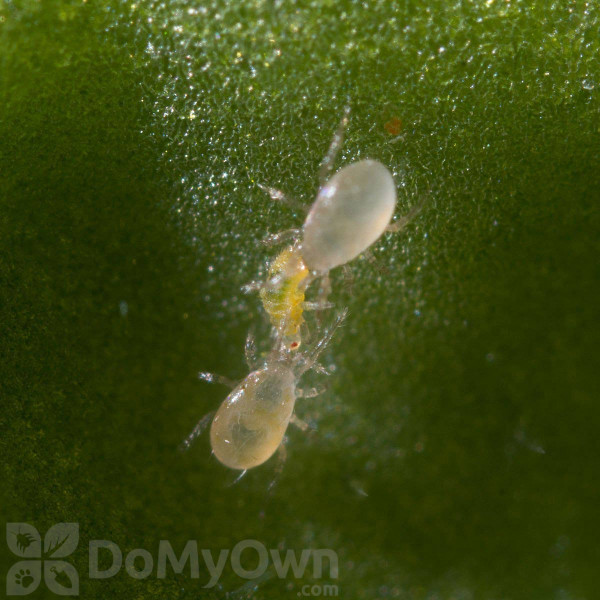
Mobile stages: beige-pink, droplet shaped, 'pushed down' position on short legs.
Eggs: oblong, transparent white.
All stages can be found in the corner of main vein and lateral veins and in the flowers.
It is not possible to distinguish Amblyseius swirskii in the field from Neoseiulus cucumeris and Neoseiulus californicus.
Introduction
Introduce sachets as soon as possible after receipt.
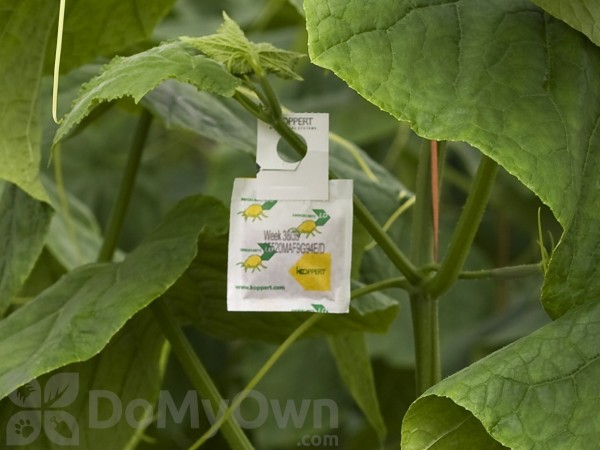
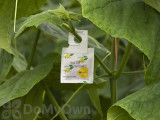
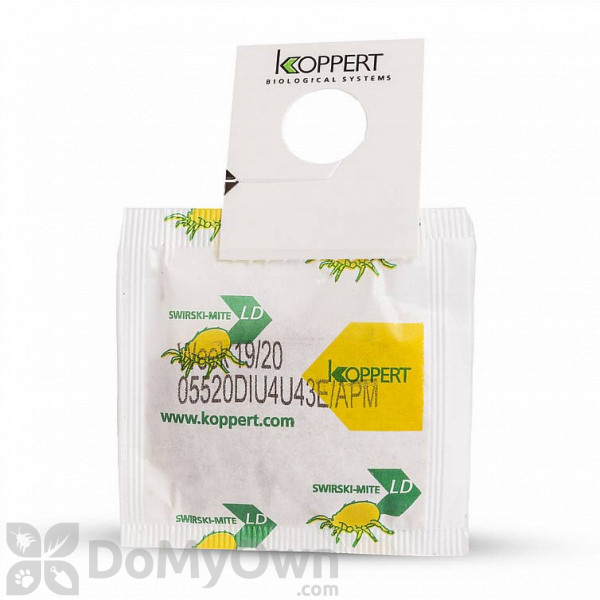
Hang up sachets in sheltered positions in the crop (no direct sunlight). Measures improving the moisture balance in the sachets, such as placing the bottom of the sachet on the moist substrate, will have a positive effect on the longevity of product.
Sachets already have an exit hole.
Handle sachets by the cardboard strip at the top; predatory mites are easily damaged.
Environmental conditions
The predatory mite Amblyseius swirskii is:
Not susceptible to diapause, so can be introduced in winter.
Tolerant to high temperature.
Storage and handling
Biological beneficials have a very short life expectancy and therefore need to be introduced into the crop as soon as possible after receipt. Storing them for a period can have a negative impact on their quality and is only possible under the conditions described below. Koppert B.V. is not liable for any loss of quality if the product is stored for longer than recommended and/or under incorrect conditions.
Storage after receipt: 1-2 days.
Storage temperature: 50-60F (10-15C)
In the dark.
Provide ventilation to prevent CO2 accumulation.
Remarks
Amblyseius swirskii can also develop on pollen of sweet pepper and aubergine.
Due to the bags’ long period of effectiveness, a preventative introduction on the basis of pollen can take place a few weeks before flowering begins.