If you're seeing droppings, hearing scratching in the walls, or spotting something dart across the floor, it's important to know whether you're dealing with mice or rats before you choose a treatment. House mice almost always live near humans, in or around houses and in fields. House mice should be controlled because they can transmit diseases, and their droppings can spoil foods. While rats are more harmful to humans than mice, mice cause far significantly greater damage to clothing, furniture, books, and many other household items.
Use this guide as the first step before moving on to our Inspect, Treat, and Prevent sections for complete mouse control.
How to Tell a Mouse from a Rat
Rats and mice are often confused for one another, but require different treatment plans and products. Learn the difference before you treat.
Mice Lifecycle
Mice may live alone or in groups. Female mice reach breeding age by around 6 weeks old, males reach breeding age by about 8 weeks old. Gestation takes about 18-21 days. There can be between 3-14 pups (mouse babies) per litter and females can produce between 5-10 litters per year.
How long do mice live?
The typical mouse life span is about 1 year in the wild.
Size
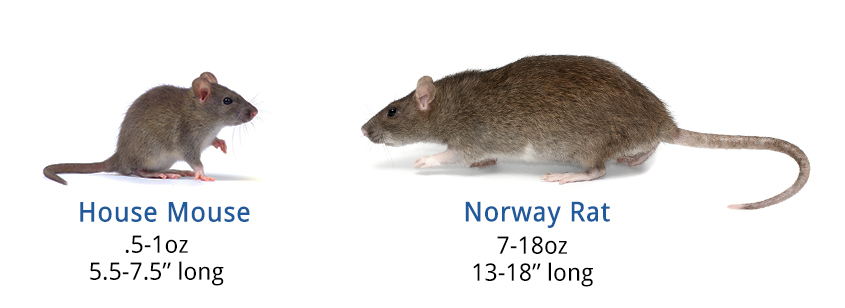
The house mouse is about 5.5 to 7.5 inches long with the tail accounting for just over half of its length.
The House Mouse weighs about .5 oz - 1 oz
Shape
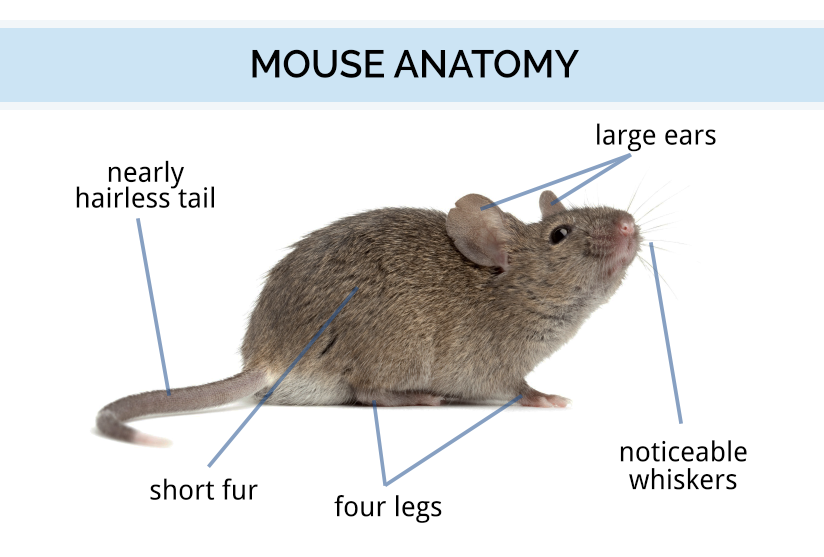
House mice have 4 legs
House mice have large ears for their small heads
House mice have long nearly hairless tails that are just over half the length of their bodies
House mice have noticeable whiskers
Color
House mice are light brown to black with short hair and a light belly