
Timbor
By DoMyOwn staff
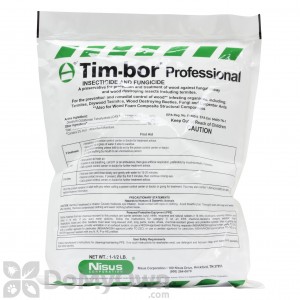

Timbor is an insecticide, fungicide and wood preservative for the protection and treatment of lumber against fungal decay and wood destroying insects (including termites, beetles, and carpenter ants). Timbor gets its preservative power from the active ingredient DOT (disodium octaborate tetrahydrate).
How does Timbor work?
When Timbor is brushed or sprayed directly onto the surface of timber, lumber, OSB, or plywood, it diffuses deep into the wood fibers and acts as a preservative to protect the wood from insects and fungi, as long as it is not exposed to flowing water. The active ingredient in Timbor (DOT) will not break down, so it provides long lasting protection even as normal moisture changes occur.
- For Termites and Beetles: Termites and beetles are best treated with a solution or foam application. As Termites or wood-boring beetles ingest or tunnel in Timbor-treated wood, the chemical begins to build up in their systems. The poisoned insect will gradually become more and more sluggish until they eventually die. This delayed-action is beneficial because it allows poisoned insects to continue to come in contact with other termites or beetles so the chemical may spread more effectively throughout the colony. Timbor is also effective against the larvae forms of termites and beetles.
- For Carpenter Ant Control: Carpenter Ants do not actually ingest wood; however they do cause significant damage by excavating wood galleries for nesting purposes. Wood treated with a Timbor solution or foam is not excavated by carpenter ants because they find the texture unpalatable. Timbor powder injected as a dust treatment into wood galleries and wall voids will provide excellent carpenter ant control. This powder collects on the ant's body and is later ingested as the ant preens itself. Note: Timbor should not be used as a stand-alone treatment since the carpenter ants can still penetrate the construction without chewing into the treated wood.
Applications
Timbor may be applied as a solution, foam, or dust.
What about general insect control?
While Timbor was designed to be a powerful weapon against wood-boring insects, it is also effective against common household pests including ants, cockroaches, and crickets. These pests naturally come into contact with Timbor deposits. Later when they clean themselves, they will ingest the chemical and eventually die due to an accumulation of the active ingredient in their systems. Timbor does not repel insects when used as a crack and crevice liquid or dust treatment.
Common Remedial and Preventative Treatments with Timbor
-
Basements & crawlspaces- Inspect and correct all moisture problems that could cause or sustain an infestation. Apply Timbor as a spray solution (use the Chapin Premier 2 Gallon Sprayer ) on all bare wood surfaces exposed in the flooring or sub floor.
-
Attics- Apply Timbor as a spray solution (use the Chapin Premier 2 Gallon Sprayer ) to all exposed wood in rafters, ceiling joists, plywood, OSB, trusses, top-plates, etc. Areas where there are known infestations can be drilled and the solution or foam injected. (This drilling and injecting technique is very effective in spot treating for Drywood termites.)
-
Exterior wood- Apply Timbor directly to all bare wood siding, wood trim, or logs with a gallon sprayer, or using pressure injection techniques. Wood that is painted or sealed should be treated with pressure injection, or else the sealing coat stripped away before treatment. After treatment of exterior wood, allow wood to dry at least 48 hours before applying a sealing coat or varnish. (This waterproofing seal will protect Timbor from diffusing out, and ensure long lasting protection).
-
Wood decks- Remove all dirt, debris, or sealant from the deck that could possibly interfere with application and absorption of Timbor. The deck should be both clean and dry with no standing puddles before application. Nearby plants or ornamentals should also be covered with plastic or other material so they will be protected from accidental contact. Apply Timbor using two applications of 10& or one application of 15%. Allow the deck to dry at least 48 hours before applying a sealing coat or varnish. (This waterproofing seal will protect Timbor from diffusing out, and ensure long lasting protection).
Prevention and Maintenance
With each additional spray treatment of Timbor, the active ingredient and penetration into the wood will increase, resulting in even greater protection against the attack of insects or fungi. Up to 4 treatments of Timbor may be made. However, if there are preexisting conditions which may have led to the infestation or may encourage future infestation, these should also be corrected. Such conditions could include inadequate ventilation, collected debris in crawl spaces, and moisture leaks.
For all other information, specific mixing instructions, or general use directions, please read the product label.
Purchase Timbor
Related Product Pages:
Termite Control
Carpenter Ant Control
Related Articles:
Timbor FAQ
Termites and Termite Control Topics
Difference Between Termites and Carpenter Ants
How To Get Rid of Carpenter Ants
Wood-boring Bugs
157 of 163 people found this article informative and helpful.